Webinar: From Lived Experience to Shared Futures; February 26, 2026; 4-5 PM central time

The following message is being shared on behalf of Keshab Thapa, Ph.D. Candidate from the Natural Resources Institute.
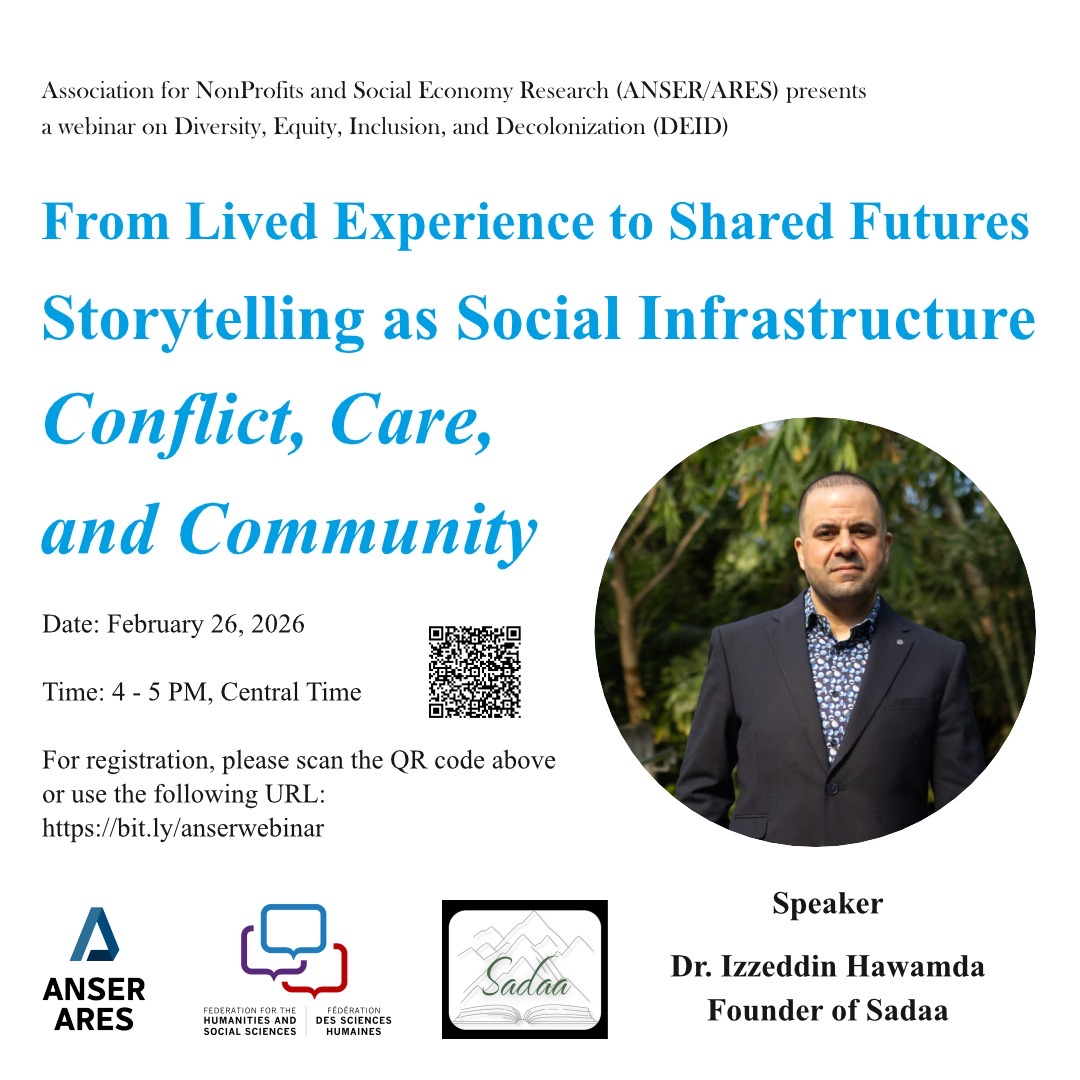
Join us on February 26 for our Webinar: From Lived Experience to Shared Futures: Storytelling as Social Infrastructure - Conflict, Care, and Community
Unbounded Stories invites participants into a reflective conversation on storytelling as a living social practice. Grounded in lived experience, this session explores how stories hold conflict and care at the same time, and how sharing them can reconnect us to our humanity and to one another. Through personal narrative and collective reflection, we consider storytelling not just as expression, but as social infrastructure, something that sustains community, nurtures belonging, and opens pathways toward shared futures.
What is your story?
Registration link: https://bit.ly/anserwebinar
[f18e5795-77c0-4ddc-b6da-e1caa3659ccc.jpeg]
🙏🙏🙏 केशव (Keshab) -------------------- केशव थापा / Keshab Thapa Ph.D. Candidate Natural Resources Institute Faculty of Environment, Earth, and Resources University of Manitoba 70 Dysart Rd., Wînipêk, Treaty 1 Territory, Manitoba, Canada, Turtle Island I acknowledge living and working from Native/Indigenous land in Wînipêk, Manitoba, Canada, Turtle Island. Manitoba is the land of the Anishinaabeg, Ininiw, Anishininiw, Dakota, Dene, Métis, and Inuit. The entire Turtle Island (North America), including Canada, is Native land that comprises rich Native/Indigenous languages, cultures, ceremonies, land use and occupancy, knowledge, and Native pride and resilience.
I acknowledge the harms and mistakes of the past and present colonization of Native people and land on Turtle Island. Hydroelectricity generation, mining, lumber extraction, and colonial law and institutions have directly impacted the exemplary lives of Native people. The water in Wînipêk comes from the Shoal Lake adjacent to the Shoal Lake 40 reserve, where Native people have struggled to have safe drinking water access and for freedom road. Rerouting flood water around colonial settlements, including Wînipêk, flooded Native communities, causing eight years of displacement for Anishinaabe communities around Lake St. Martin in the 2011 super flood. Canada's Indian Acthttps://abolishindianact.ca/ is the most harmful law imposed on Native people. The Indian Act created barriers to land back; the Indian Act instead placed land in trust for the British crown.
I respect the Native/Indigenous Peoples, who have always lived and thrived here, as well as their languages and cultures. I am dedicated to moving forward in partnership with Native Peoples in a spirit of reconciliation and collaboration by recognizing the truth.
participants (1)
-
 Nick Lupky